
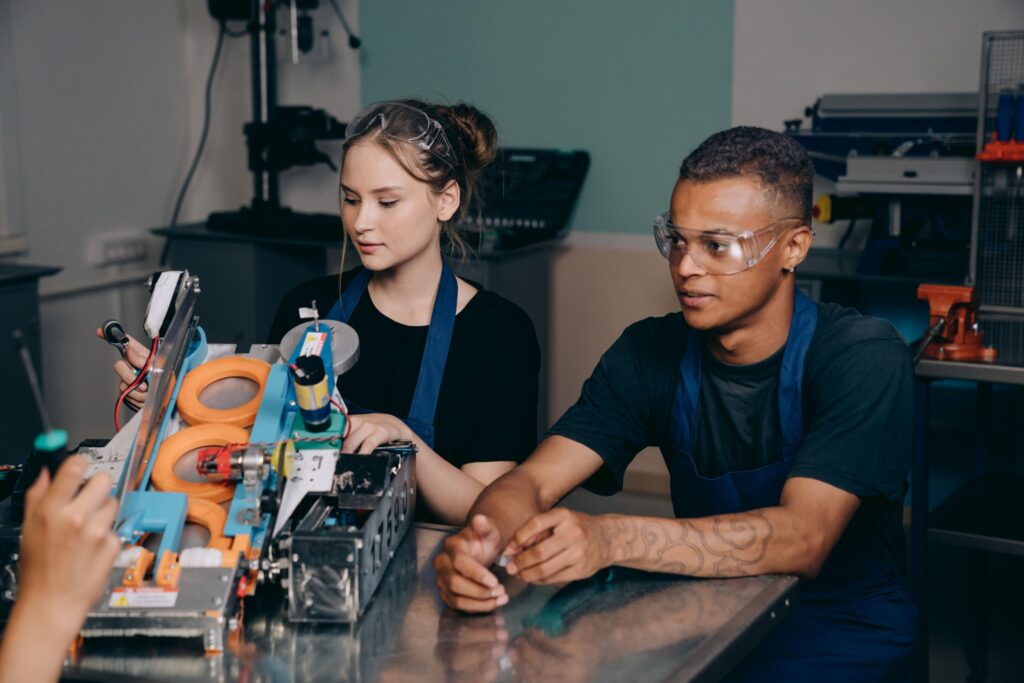
Gen Z will make up around a third of the global workforce by 2030, and the oldest are now approaching 30. This guide explains what drives them, how AI is squeezing their first jobs, and how engineering and manufacturing employers can manage and motivate them.
They grew up online, through a pandemic and a cost-of-living crisis. That has made them practical, cautious about money and clear about what they want from work: stability, skills, fair pay, flexibility and a manager who treats them as a person.
Many are already engineers, technicians and team leaders, and some are managing people themselves. The rest are leaving school, college and university into the toughest entry-level jobs market in more than a decade.
For engineering and manufacturing employers, that is a real opportunity. Our sector offers the hands-on, secure, skilled careers many young people say they want. Too few of them know it.
Defining the Generation Z Workforce
Just as millennials changed how teams were led, Gen Z is changing what “business as usual” looks like, and engineering and manufacturing employers are feeling it first.
Generational cut-off points aren’t an exact science, but anyone born between 1997 and 2012 is generally considered Gen Z. They follow the millennials and come before Generation Alpha.
In engineering and manufacturing, good Gen Z candidates are in short supply and high demand. They are practical, quick to learn and comfortable with technology. They also have clear priorities, which can surprise employers used to older generations.
Focus on Health and Wellbeing
Gen Z has grown up through a pandemic and a cost-of-living crisis, and it shows. In the UK, 44% of Gen Zs name the cost of living as their top concern, 41% say they live payslip to payslip, and 32% feel stressed all or most of the time (Deloitte).
They expect employers to take wellbeing seriously, and burnout and poor work-life balance are common reasons for them to leave. Stress and burnout are also the most cited reasons Gen Zs give for avoiding leadership roles.
Technology Savvy
Gen Z has never known a world without the internet, and AI is now part of their everyday working life. 82% of UK Gen Zs use AI in their day-to-day work, but only 55% say their employer gives them the AI tools they need.
Engineering and manufacturing firms with outdated systems will struggle to hold their interest. Modern CAD and simulation software, connected machinery, digital maintenance tools and sensible use of AI all signal a business that is investing in the future.
More tools isn’t always better, though. Globally, 58% of Gen Zs report digital fatigue from constant alerts, tool switching and too many platforms. A small set of well-chosen tools beats a cluttered one.
Inclusive by Default
Gen Z is the most diverse generation in the UK workforce. They expect to be treated fairly, listened to and judged on what they do, whatever their background.
For engineering and manufacturing, where young women in particular often don’t see the sector as being for them, an inclusive culture is a practical way to widen the talent pool.
Ambitious, on Their Own Terms
Gen Z is ambitious, but they define progress differently. 84% of UK Gen Zs are interested in a leadership role at some point, yet only 5% say it is their main career goal. Globally, 44% prefer steady progress to rapid promotion.
They want to build real expertise, be recognised for it and move up when they’re ready. Clear goals, regular training and visible career paths matter more to them than job titles.
Desire for Stability
Money worries shape Gen Z’s career choices. In the UK, 46% have delayed major life decisions because of their finances, and 55% say housing affordability affects their career decisions.
That makes them more cautious than millennials were at the same age. When advertising roles, engineering and manufacturing employers should spell out a secure, long-term opportunity, with a clear plan for growth and development.
AI and the First-Job Squeeze
Young people are finding it harder than ever to get a first job, and that is an opening for engineering and manufacturing employers.
AI is taking over many of the routine tasks that used to train new starters in offices. Combined with higher employment costs, that has hit entry-level hiring hard. Graduate vacancies fell to their lowest level in a decade, and more than a third of UK employers say they have cut entry-level opportunities. Around one million 16 to 24-year-olds are not in education, employment or training (HRD Connect).
Gen Z has noticed. Many now see hands-on, technical work as more secure than office jobs, and Gen Z employment in construction and the trades has been growing. Nearly half of UK SMEs now value apprenticeships and degrees equally.
The Perception Gap
The problem is that manufacturing is almost invisible to young people. In a survey of 16 to 24-year-olds:
- 59% said manufacturing careers sounded interesting
- only 28% believed manufacturing still happens in the UK
- just 4% would actually pursue a career in it
What This Means for Employers
- Show the work. Young people can’t choose a career they can’t see. Share what your engineers actually do on your website, on social media and in your job adverts.
- Keep hiring at entry level. While others cut back, you can pick from strong candidates. Apprentices, graduates and career changers are tomorrow’s senior engineers.
- Sell the security. Skilled engineering roles are hard to automate. Make that part of your pitch.
- Teach AI alongside the trade. Gen Z expects to use AI at work. Showing them how it’s used safely in your business makes you more attractive, not less.
Millennials vs Generation Z: The Difference
Millennials and Gen Z often get lumped together, but they want different things from work.
Millennials grew up as digital pioneers, watching social media, smartphones and video calls arrive. Many started work in the boom years before 2008 or in the recovery after it. As a group they tend to be optimistic, collaborative and open to changing jobs to get on.
Gen Z grew up with all of that already in place, and with recession, a pandemic and rising living costs as the backdrop. That has made them more realistic and more cautious. They are keen to make a difference, but they want a secure base first.
In practice, that means:
- Stability before speed. Gen Z values job security and steady progress over rapid promotion.
- Skills over titles. They want to become genuinely good at what they do, and will stay where they can keep learning.
- Blended communication. They are comfortable on messaging apps and video calls, but they still value time with experienced colleagues, especially when learning a practical skill.
- Boundaries. They work hard, but they expect their time outside work to be respected.
Gen Z won’t hop between jobs for the sake of it. But if a role offers no progress, no learning and no balance, they will move on.
How to Manage Generation Z in the Workplace
Managing Gen Z well comes down to honesty, support and room to grow. This generation wants a manager who is open with them, listens and treats them with respect. They also want a workplace that invests in modern technology, offers some flexibility and shows them a future.
1. Prioritise Collaboration and Communication
Gen Z wants to feel part of a team. Messaging apps and video calls are second nature to them, but in engineering and manufacturing, much of the best learning still happens side by side.
In a survey of UK manufacturing workers, only 11% of Gen Z said they prefer digital-only training. Most want hands-on learning from experienced people. Pair new starters with your senior engineers and technicians, and make time for that knowledge to pass on.
Be open about how the business is doing, too. Regular, honest updates help a security-conscious generation feel settled.
2. Allow for Independence and Autonomy
Gen Z appreciates guidance, but they also want room to find their own way of doing things. Once the safety and quality standards are clear, give them ownership of tasks and projects.
Ask for their ideas on how work could be done better, and act on the good ones. Being trusted and heard does a lot for engagement.
3. Implement Strategies for Work-Life Balance
Work-life balance is the most popular career goal among UK Gen Zs, ranked above financial independence and well above leadership.
In many engineering and manufacturing roles, full remote working isn’t possible. Flexibility can still take other forms: shift patterns agreed in advance, flexible start and finish times, compressed hours, hybrid working for design or office-based roles, and time off in lieu for out-of-hours callouts.
The law is moving the same way. Under the Employment Rights Act 2025, employers are due to have to show that any refusal of a flexible working request is reasonable. Make sure your managers know what you can offer and encourage people to take their breaks and annual leave.
4. Embrace New Technology
Gen Z is the first generation to enter work with AI tools already in their pocket. Employers who ignore that will look behind the times.
Give your team modern, reliable tools for design, maintenance, scheduling and reporting. Set clear rules on how AI can be used safely with customer and technical data, and offer training so everyone uses it well.
Ask your team which tools help and which get in the way. Fewer, better tools reduce the digital fatigue many Gen Zs say they feel.
5. Empathise with Mental Health Needs
With a third of UK Gen Zs feeling stressed most of the time, wellbeing isn’t a nice-to-have.
Train managers to spot the signs of stress and to have supportive conversations. Practical support such as an employee assistance programme, access to counselling, sensible workloads and fair pay all help. So does a culture where asking for help isn’t seen as weakness.
How to Motivate Your Gen Z Employees
Gen Z employees are already self-motivated. Many have watched family members struggle financially and are determined to build secure, skilled careers. They are also driven by their values. If a workplace doesn’t match what matters to them, they will look elsewhere.
Step 1: Provide Regular Feedback
Gen Z wants to know how they’re doing now, not at an annual review. Short, regular check-ins work better than a once-a-year conversation.
Recognise good work when you see it, even with a quick message. Be just as clear about what needs to improve, and how. Clear expectations matter too: these are conscientious people who want to do a good job, and they can only hit a target they understand.
Step 2: Promote Interpersonal Relationships
Gen Z may live online, but they still want to feel part of a team. Make time for people to get to know each other, especially across shifts, sites and remote roles.
Team days, site visits, toolbox talks and shared problem-solving all help. Friendly competition, such as improvement challenges, can tap into their drive too. Access to leaders matters as well: Gen Z wants to be able to talk to their manager and senior people, not just their peers.
Step 3: Provide Growth Opportunities
Gen Z wants future-proof skills, and they’ll stay where they can keep building them. Globally, 79% use AI to look for learning and development opportunities, so if you don’t offer a path, they’ll go looking for one.
Give them a visible route forward. That might be an apprenticeship or degree apprenticeship, manufacturer and product training, professional registration with a body such as the IMechE or IET, mentoring from senior engineers, or time shadowing a more senior role. A clear development plan from day one shows them they have a future with you.
Step 4: Promote Inclusion
Gen Z feels most comfortable where everyone is treated fairly and has a voice. Engineering and manufacturing teams that mix ages, backgrounds and experience also solve problems better.
Make sure everyone feels listened to and respected. Invite younger team members into improvement and planning meetings, ask for their ideas, and give feedback on what happens to them.
Step 5: Offer the Right Benefits
Pay still matters, especially with living costs where they are. But for a security-conscious generation, the right benefits can tip the balance. Benefits that appeal to Gen Z include:
- a competitive salary, reviewed regularly
- a pension above the legal minimum
- private medical insurance or a health cash plan
- an employee assistance programme
- paid training, qualifications and professional memberships
- enhanced family leave
- flexible hours or extra annual leave
Ask your team what they value most, and tailor packages where you can.
Next Steps to Take
If you want to attract and keep the right Gen Z talent, I can help. I’ve been recruiting engineers and technical people since 1998, and I can help you shape job adverts and offers that speak to younger candidates.
Related articles
- How to Build a Resilient Team
- How to Improve Productivity in Manufacturing and Engineering Teams
- The Ultimate Guide to the Recruitment Process
Sources
- Deloitte, 2026 Gen Z and Millennial Survey: UK findings
- Deloitte, 2026 Gen Z and Millennial Survey: global findings
- Oxford Economics, As Gen Z enters the workforce
- Nestlé UK & Ireland, Britain’s manufacturing sector research
- HRD Connect, The graduate job market is collapsing
- Employment Hero, Computer science graduates and AI jobs
- Drives & Controls, Study reveals untapped resource for tackling UK’s skills crisis
- GOV.UK, Employment Rights Act 2025 timeline